Semester Assignment

Naturligvis

Naturligvis is a digital travel platform that empowers users to plan sustainable trips within Norway, making eco-friendly choices feel natural, accessible, and inspiring. With clear guidance and thoughtful interaction design, the experience helps travelers reduce their environmental impact while still enjoying the best Norway has to offer.

Background

Traveling sustainably sounds easy in theory — but in practice, people struggle. Users want to reduce their environmental footprint, yet they often face barriers: confusing tools, higher prices, limited information, and too much time spent researching what is “green enough”. As sustainability becomes increasingly important in daily life, the demand for smarter, greener travel solutions continues to grow. But we learned that many travelers feel that sustainable options are hard to find, more expensive and not clearly labeled. Our challenge: Could we design a travel planner that makes sustainable exploration in Norway feel effortless and rewarding? Naturligvis was born from that need.


Goal

Our mission was clear: Create a user-friendly, sustainable travel planner that helps users discover eco-friendly transport, accommodations, and activities — while feeling supported and inspired in their choices.


We based the goals on concrete UX research questions like:

  • Who are our users?
  • What tools do they need to plan sustainable travel?
  • Why would they choose us over current planners?


Ultimately, we wanted to give travelers confidence in choosing greener — without spending more time or money than necessary.


Process

We followed a full UX methodology from Empathize → Define → Ideate → Prototyping → Usability Testing.


Discovery & Research

We used three complementary research methods:

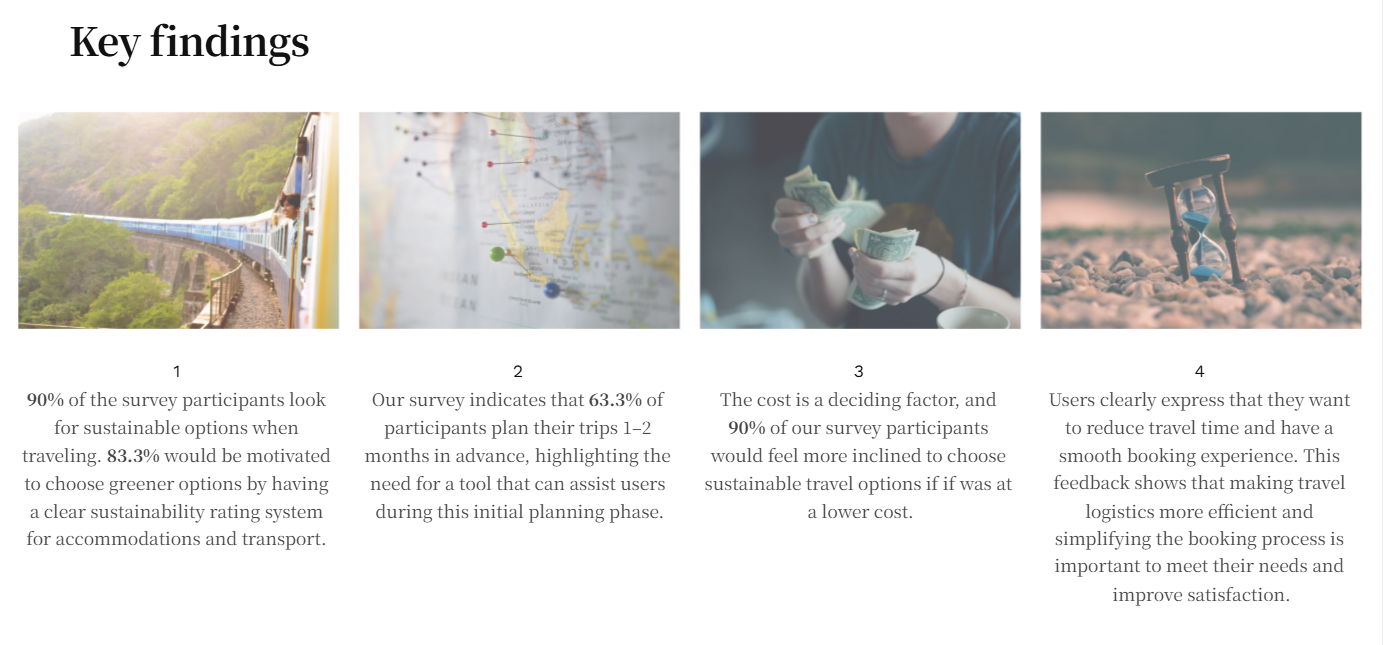
  • Online survey → Real travel habits and sustainability priorities
  • Competitor analysis → Gaps in how existing platforms present eco-options
  • Literature review → Validated context and trends in sustainable travel


Defining the Problem

Eco-conscious travelers lack one unified platform to compare affordable, sustainable travel options within Norway, resulting in uninformed choices and extra planning stress.

Ideation & My Role

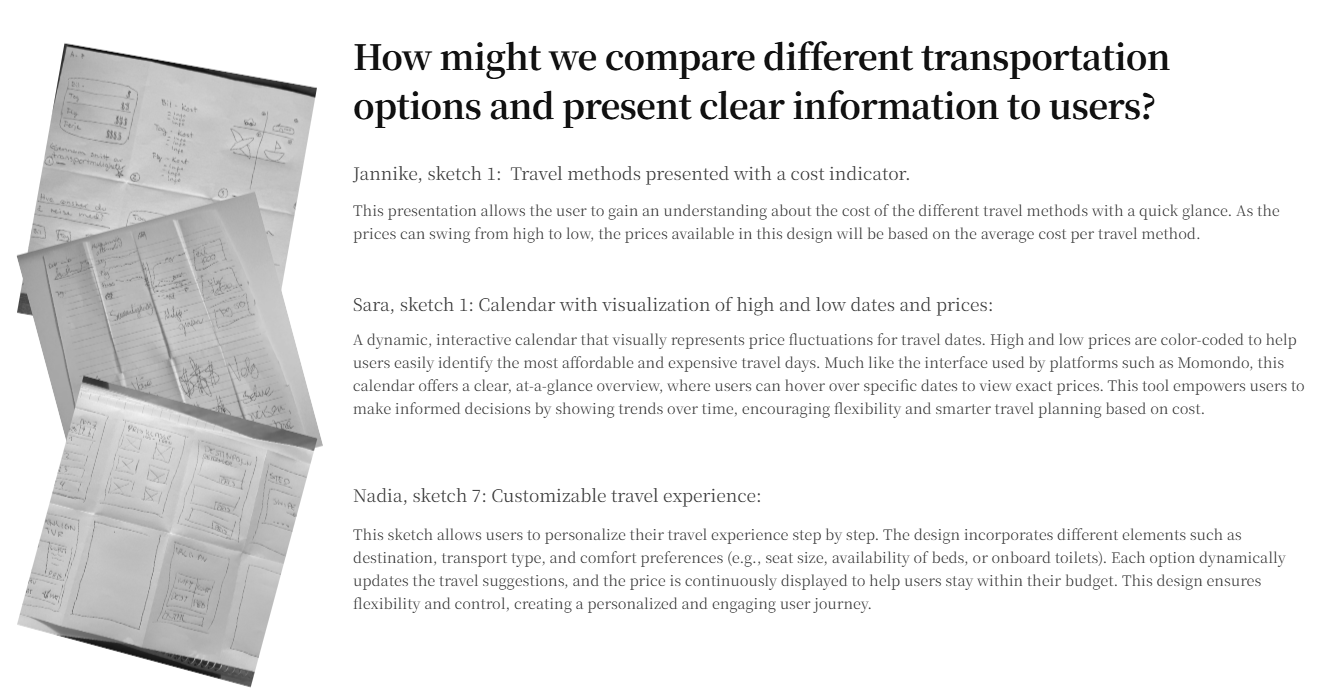
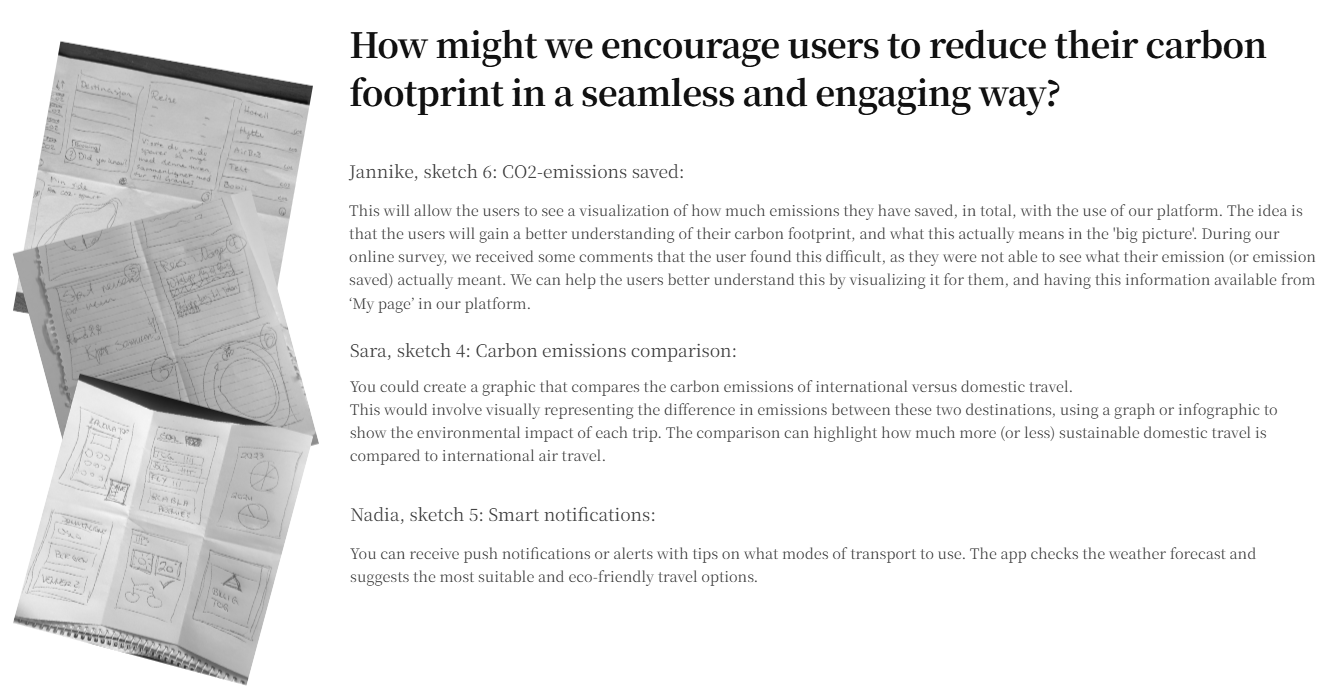
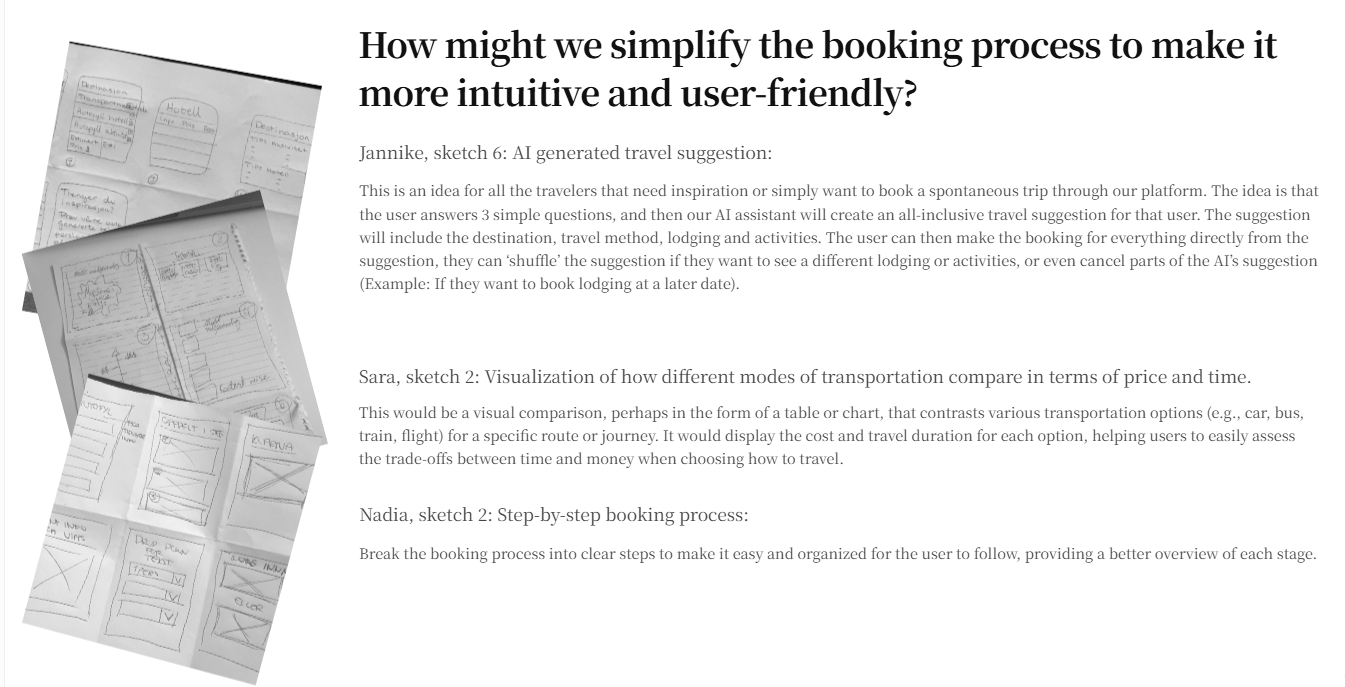
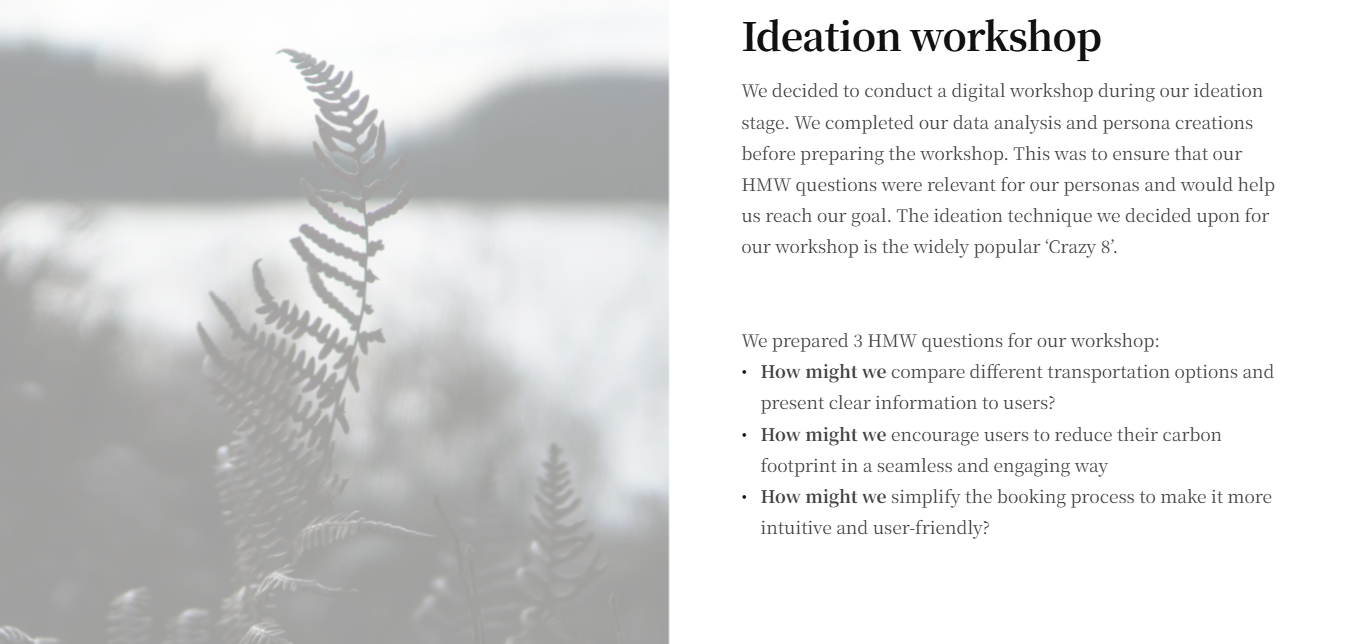
I planned and facilitated the ideation workshop, turning insights into real features. As a group, we shaped concepts that focused on:

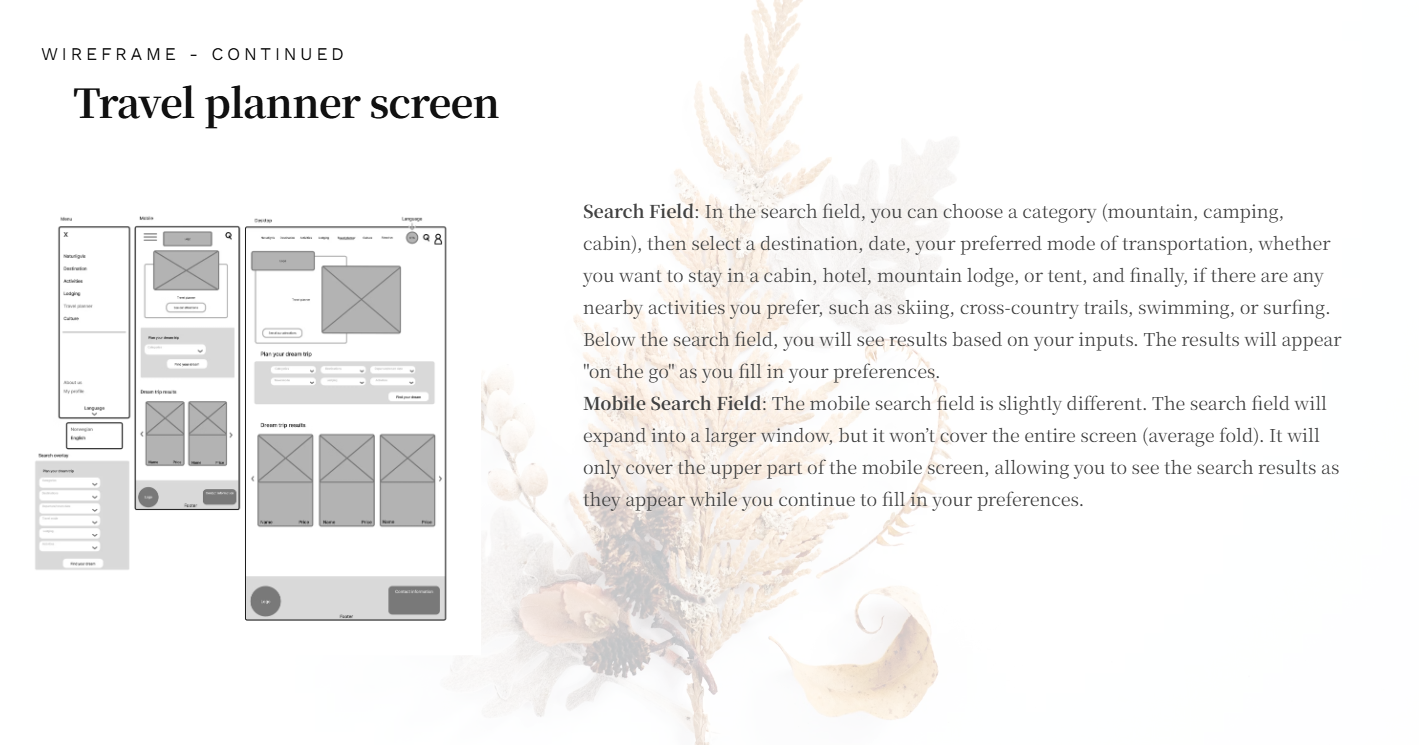
  • personalized destination filtering
  • budget-friendly travel choices
  • trust-building content about partners and impact

Design - My Contribution

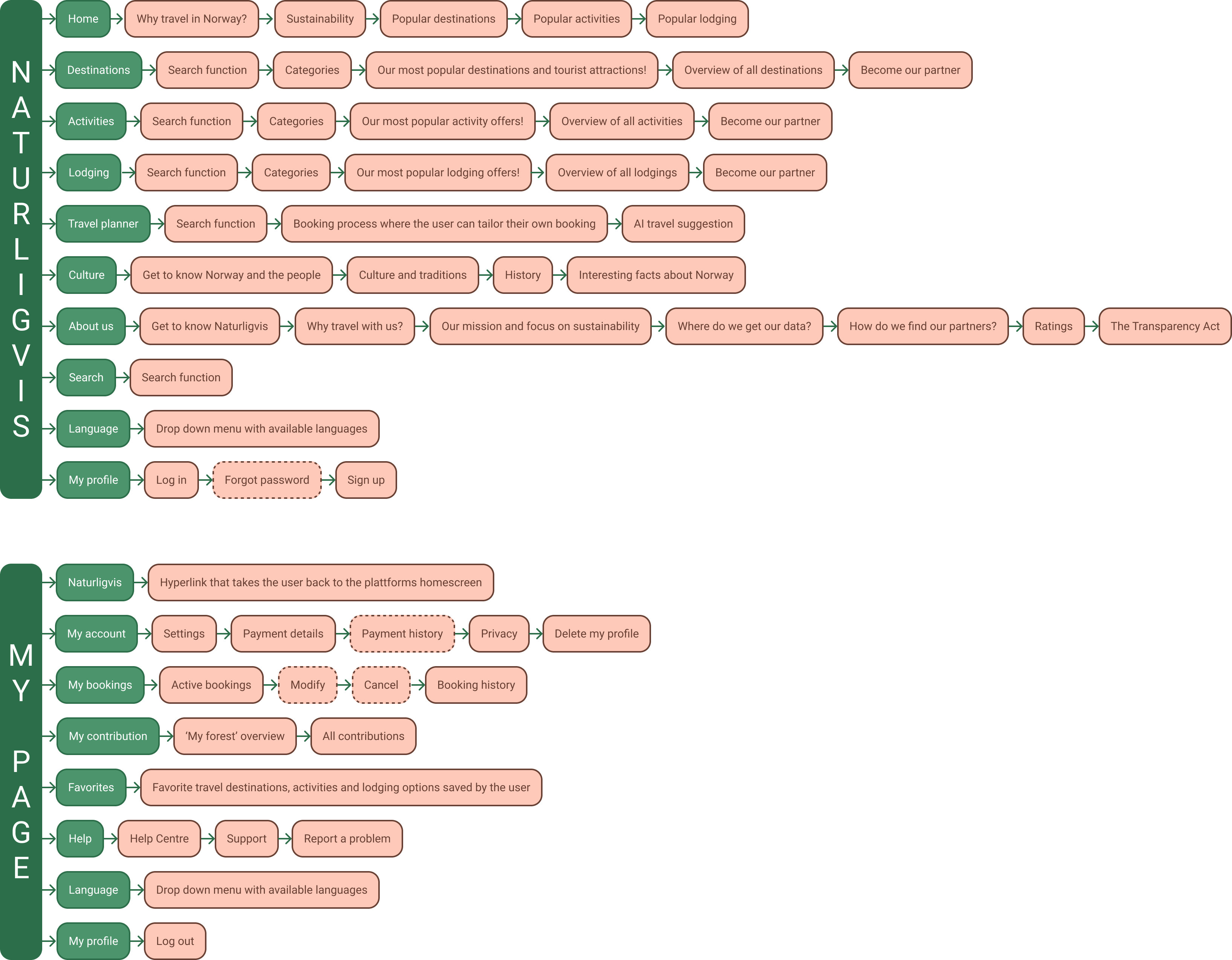
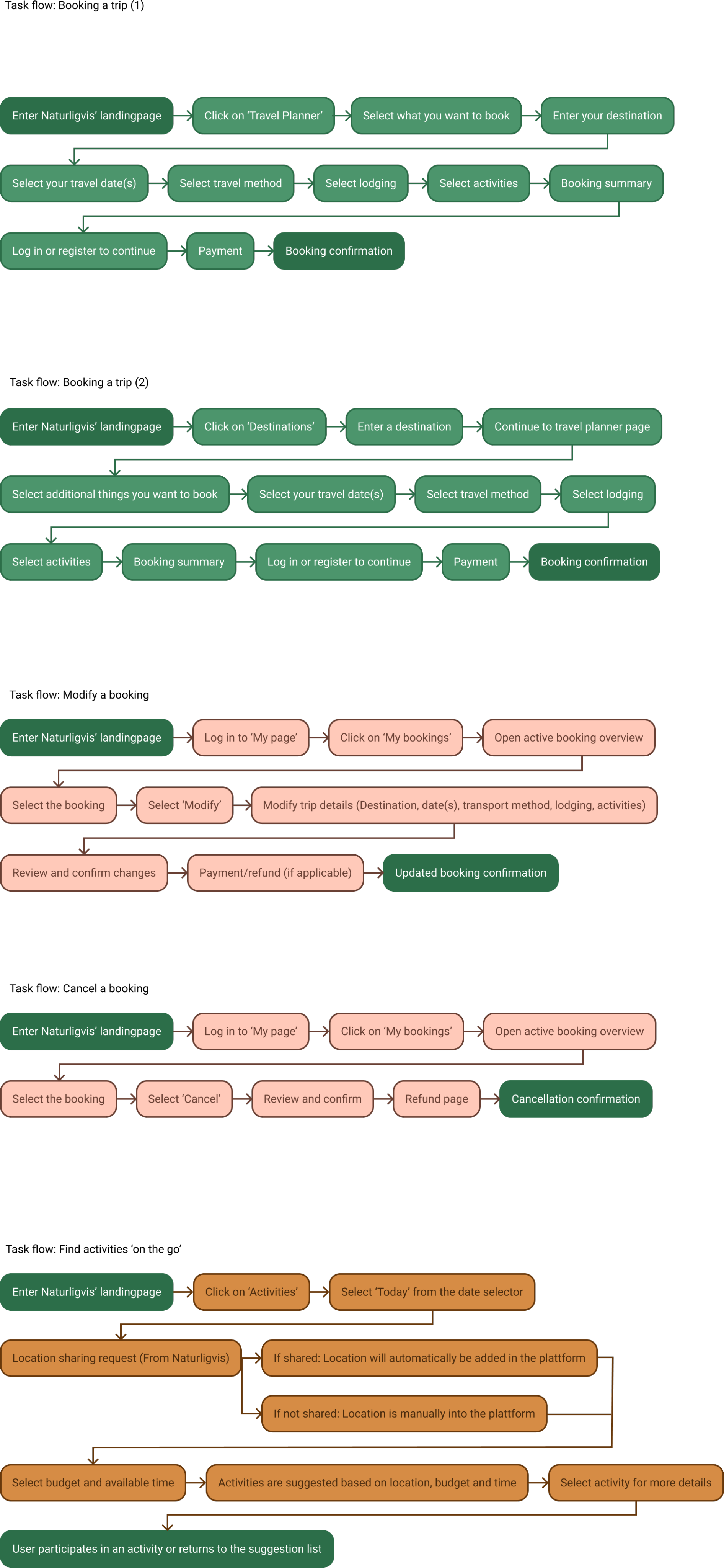
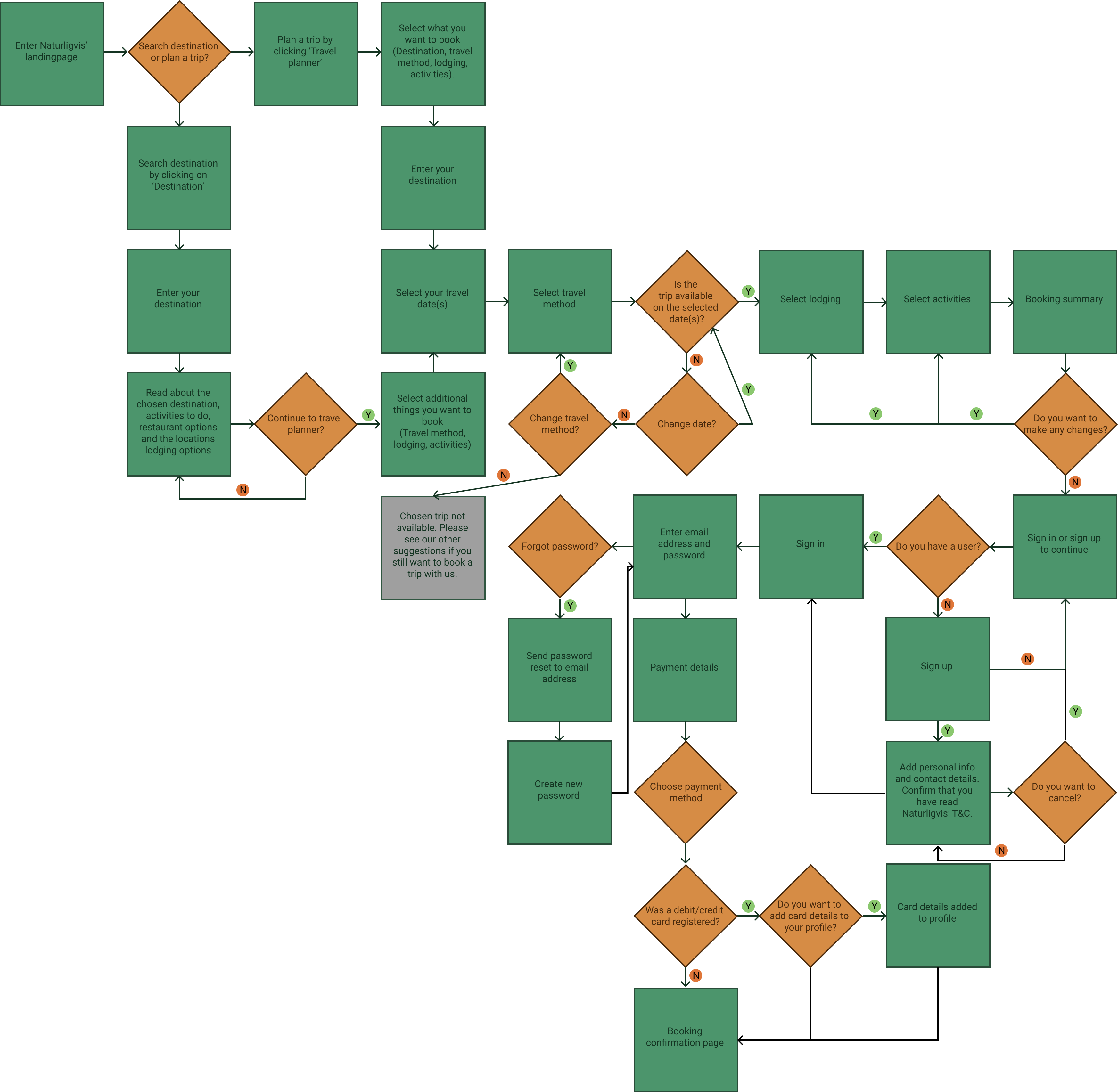
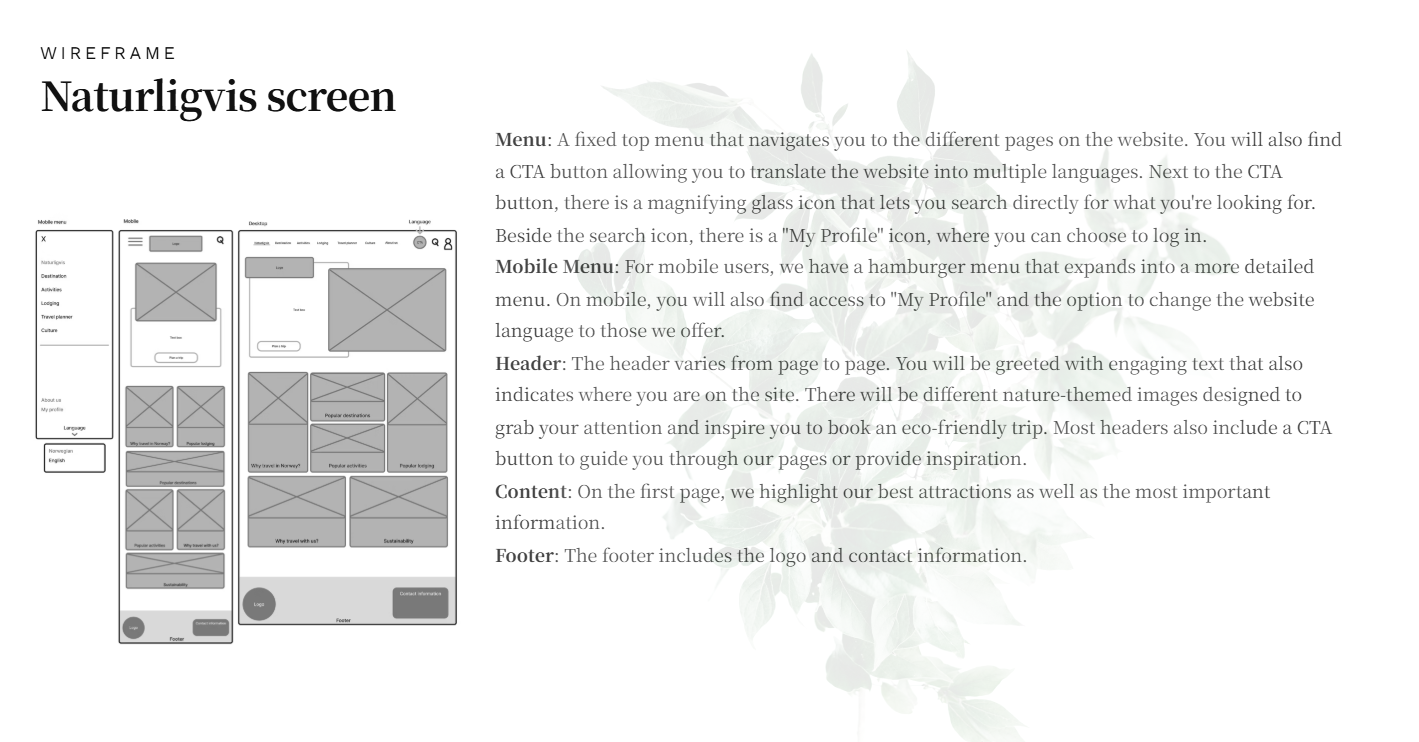
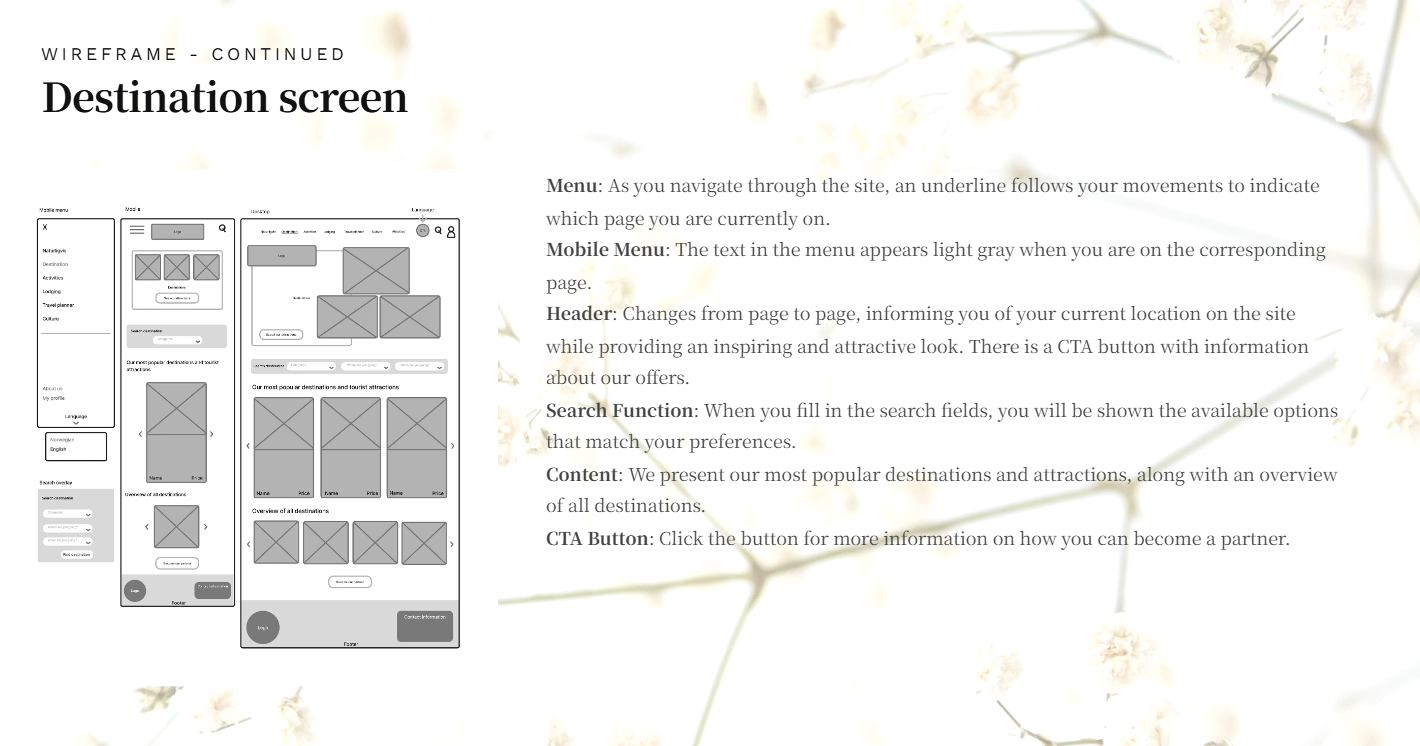
I led Information Architecture, task flows, and user flows to ensure navigation was intuitive across Naturligvis:

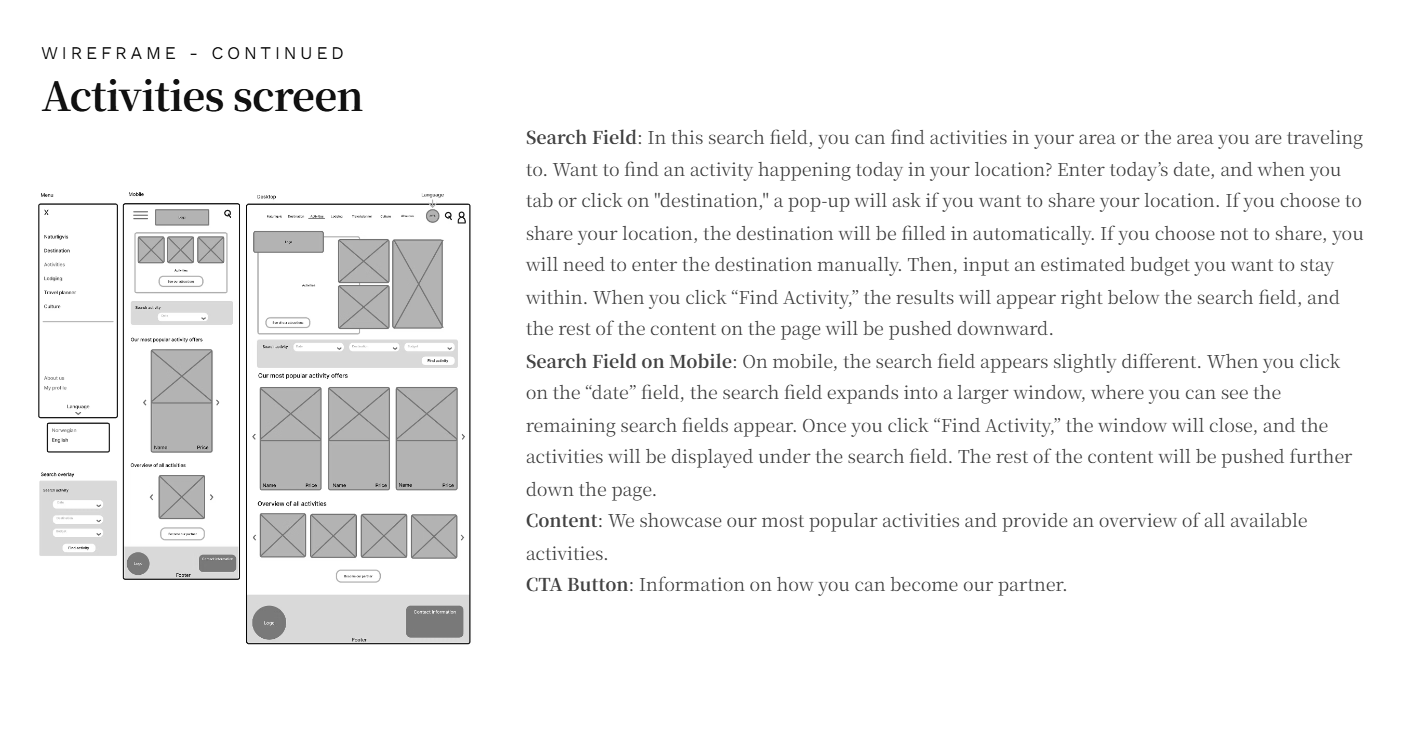
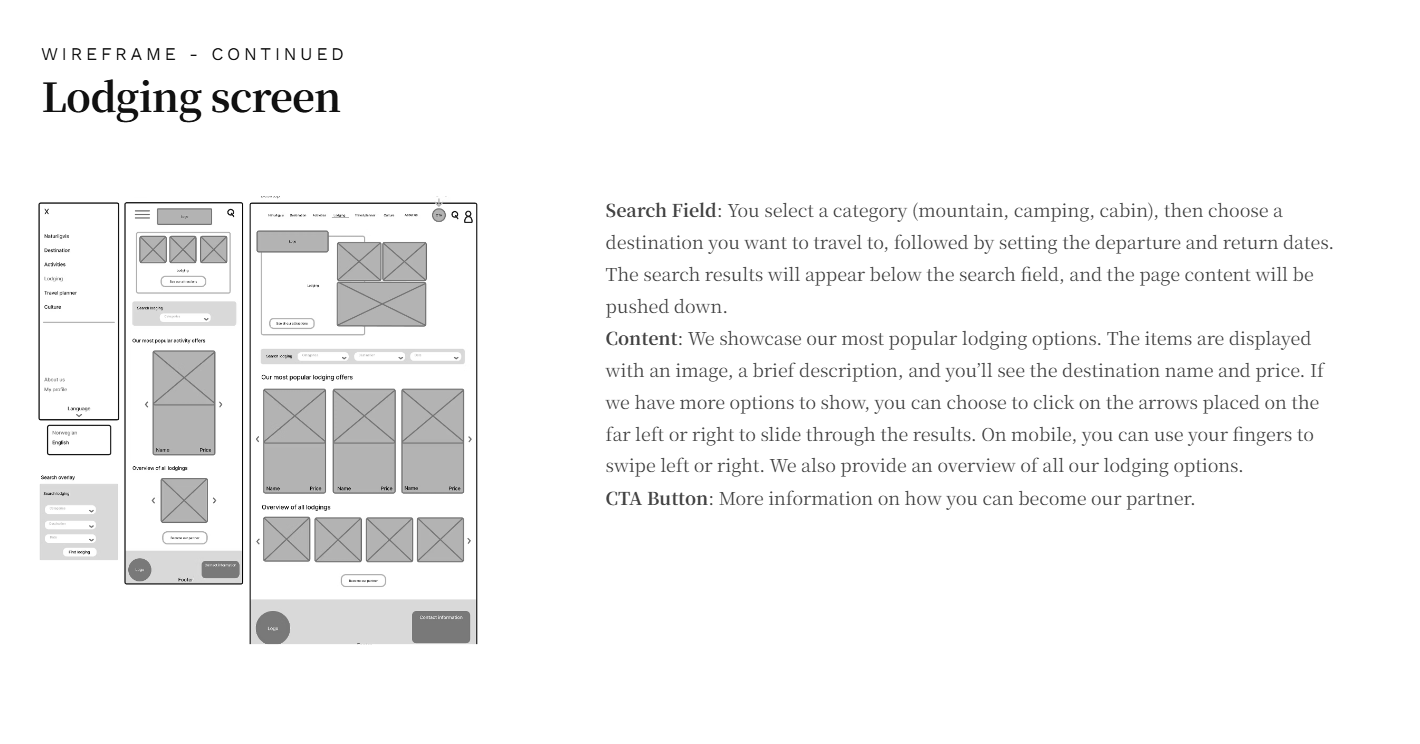
  • Clear search + filter logic
  • Simple booking structure
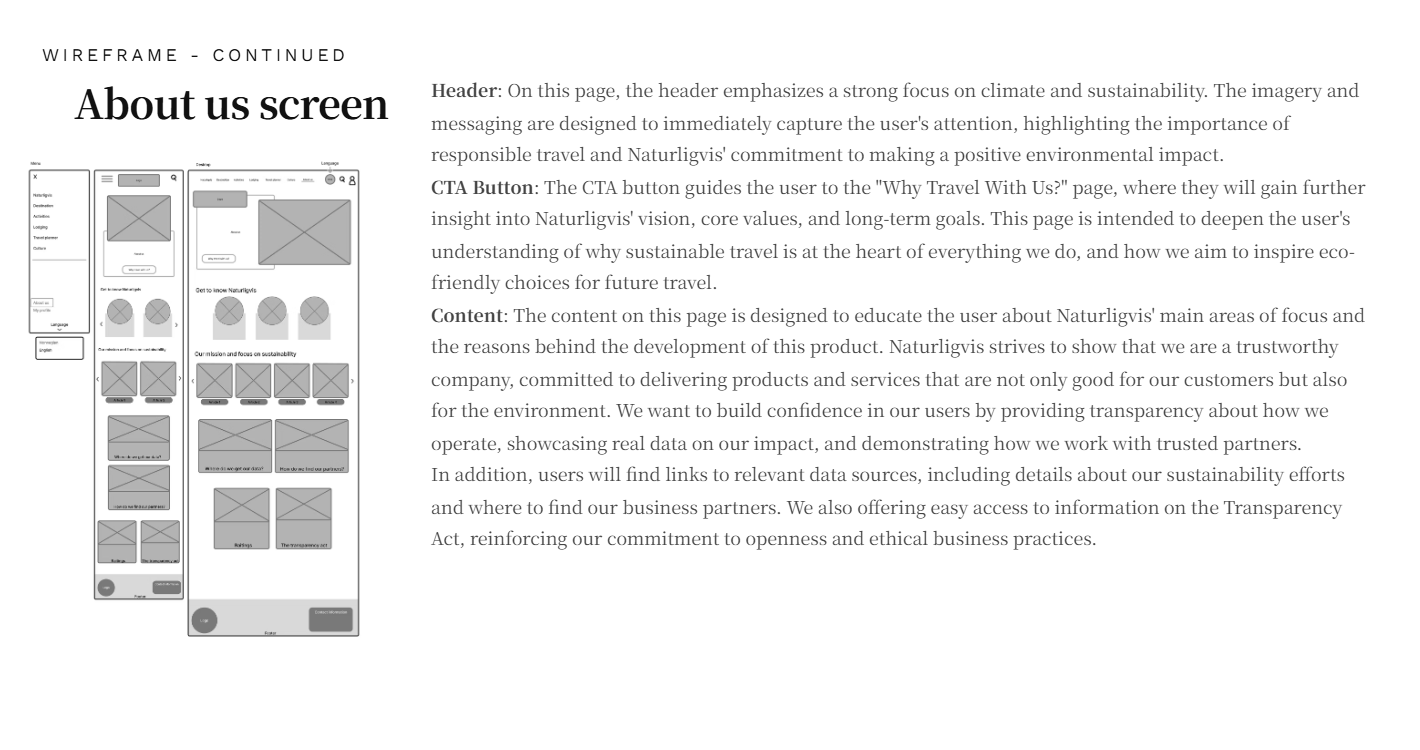
  • Strong trust indicators (About Us, transparency content)

We applied persuasive design and Norman’s Three Levels to motivate greener travel:

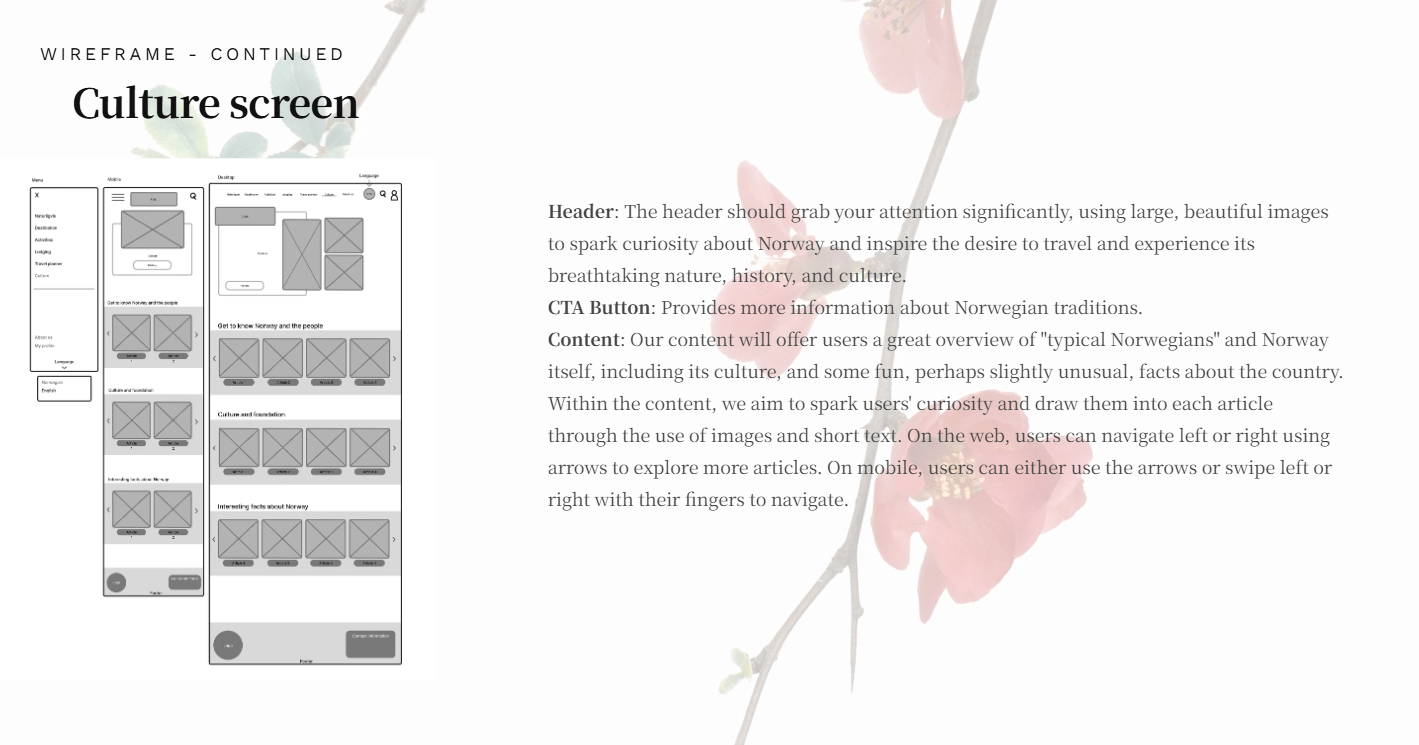
  • Visceral: beautiful imagery inspiring curiosity
  • Behavioral: simple, efficient interactions
  • Reflective: CO₂ savings + a virtual forest that grows with each sustainable choice

Prototype & Testing

We user-tested the Naturligvis prototype and uncovered key improvements:

  • booking navigation could be clearer
  • modify/cancel trip visibility needed enhancement
  • login requirements needed stronger affordances

These insights directly shaped interface refinements.


Result

Naturligvis became a platform where eco-friendly travel feels:

  • guided
  • rewarding
  • attainable for real people


Key design outcomes:

  • Sustainable options are highlighted, not hidden
  • Search tools provide personalized and budget-aware results
  • Users can see real impact, including CO₂ savings and their growing forest
  • Responsive design scales smoothly across devices

In short:Naturligvis makes the greener path the easy path.


What I Have Learned

This project deepened my ability to combine usability and sustainability into one meaningful experience. Through research and testing, I learned how important it is to:

  • present options clearly to reduce cognitive effort
  • guide decisions visually to encourage sustainable behavior
  • design for both values and constraints
  • collaborate and communicate user needs through flows and IA

But the biggest lesson?

Sustainability becomes powerful when it becomes practical.

Naturligvis taught me that good design doesn’t just inspire people to do better, it gives them the tools to actually do it.



Semester Assignment

Naturligvis

Naturligvis is a digital travel platform that empowers users to plan sustainable trips within Norway, making eco-friendly choices feel natural, accessible, and inspiring. With clear guidance and thoughtful interaction design, the experience helps travelers reduce their environmental impact while still enjoying the best Norway has to offer.

Background

Traveling sustainably sounds easy in theory — but in practice, people struggle. Users want to reduce their environmental footprint, yet they often face barriers: confusing tools, higher prices, limited information, and too much time spent researching what is “green enough”. As sustainability becomes increasingly important in daily life, the demand for smarter, greener travel solutions continues to grow. But we learned that many travelers feel that sustainable options are hard to find, more expensive and not clearly labeled. Our challenge: Could we design a travel planner that makes sustainable exploration in Norway feel effortless and rewarding? Naturligvis was born from that need.


Goal

Our mission was clear: Create a user-friendly, sustainable travel planner that helps users discover eco-friendly transport, accommodations, and activities — while feeling supported and inspired in their choices.


We based the goals on concrete UX research questions like:

  • Who are our users?
  • What tools do they need to plan sustainable travel?
  • Why would they choose us over current planners?


Ultimately, we wanted to give travelers confidence in choosing greener — without spending more time or money than necessary.


Process

We followed a full UX methodology from Empathize → Define → Ideate → Prototyping → Usability Testing.


Discovery & Research

We used three complementary research methods:

  • Online survey → Real travel habits and sustainability priorities
  • Competitor analysis → Gaps in how existing platforms present eco-options
  • Literature review → Validated context and trends in sustainable travel


Defining the Problem

Eco-conscious travelers lack one unified platform to compare affordable, sustainable travel options within Norway, resulting in uninformed choices and extra planning stress.

Ideation & My Role

I planned and facilitated the ideation workshop, turning insights into real features. As a group, we shaped concepts that focused on:

  • personalized destination filtering
  • budget-friendly travel choices
  • trust-building content about partners and impact

Design - My Contribution

I led Information Architecture, task flows, and user flows to ensure navigation was intuitive across Naturligvis:

  • Clear search + filter logic
  • Simple booking structure
  • Strong trust indicators (About Us, transparency content)

We applied persuasive design and Norman’s Three Levels to motivate greener travel:

  • Visceral: beautiful imagery inspiring curiosity
  • Behavioral: simple, efficient interactions
  • Reflective: CO₂ savings + a virtual forest that grows with each sustainable choice

Prototype & Testing

We user-tested the Naturligvis prototype and uncovered key improvements:

  • booking navigation could be clearer
  • modify/cancel trip visibility needed enhancement
  • login requirements needed stronger affordances

These insights directly shaped interface refinements.


Result

Naturligvis became a platform where eco-friendly travel feels:

  • guided
  • rewarding
  • attainable for real people


Key design outcomes:

  • Sustainable options are highlighted, not hidden
  • Search tools provide personalized and budget-aware results
  • Users can see real impact, including CO₂ savings and their growing forest
  • Responsive design scales smoothly across devices

In short:Naturligvis makes the greener path the easy path.


What I Have Learned

This project deepened my ability to combine usability and sustainability into one meaningful experience. Through research and testing, I learned how important it is to:

  • present options clearly to reduce cognitive effort
  • guide decisions visually to encourage sustainable behavior
  • design for both values and constraints
  • collaborate and communicate user needs through flows and IA

But the biggest lesson?

Sustainability becomes powerful when it becomes practical.

Naturligvis taught me that good design doesn’t just inspire people to do better — it gives them the tools to actually do it.
 

Semester Assignment

Naturligvis

Naturligvis is a digital travel platform that empowers users to plan sustainable trips within Norway, making eco-friendly choices feel natural, accessible, and inspiring. With clear guidance and thoughtful interaction design, the experience helps travelers reduce their environmental impact while still enjoying the best Norway has to offer.

Background

Traveling sustainably sounds easy in theory, but in practice, people struggle. Users want to reduce their environmental footprint, yet they often face barriers: confusing tools, higher prices, limited information, and too much time spent researching what is “green enough”. As sustainability becomes increasingly important in daily life, the demand for smarter, greener travel solutions continues to grow. But we learned that many travelers feel that sustainable options are hard to find, more expensive and not clearly labeled. Our challenge: Could we design a travel planner that makes sustainable exploration in Norway feel effortless and rewarding? Naturligvis was born from that need.


Goal

Our mission was clear: Create a user-friendly, sustainable travel planner that helps users discover eco-friendly transport, accommodations, and activities while feeling supported and inspired in their choices.


We based the goals on concrete UX research questions like:

  • Who are our users?
  • What tools do they need to plan sustainable travel?
  • Why would they choose us over current planners?


Ultimately, we wanted to give travelers confidence in choosing greener without spending more time or money than necessary.


Process

We followed a full UX methodology from Empathize → Define → Ideate → Prototyping → Usability Testing.


Discovery & Research

We used three complementary research methods:

  • Online survey → Real travel habits and sustainability priorities
  • Competitor analysis → Gaps in how existing platforms present eco-options
  • Literature review → Validated context and trends in sustainable travel


Defining the Problem

Eco-conscious travelers lack one unified platform to compare affordable, sustainable travel options within Norway, resulting in uninformed choices and extra planning stress.

Ideation & My Role

I planned and facilitated the ideation workshop, turning insights into real features. As a group, we shaped concepts that focused on:

  • personalized destination filtering
  • budget-friendly travel choices
  • trust-building content about partners and impact

Design - My Contribution

I led Information Architecture, task flows, and user flows to ensure navigation was intuitive across Naturligvis:

  • Clear search + filter logic
  • Simple booking structure
  • Strong trust indicators (About Us, transparency content)

We applied persuasive design and Norman’s Three Levels to motivate greener travel:

  • Visceral: beautiful imagery inspiring curiosity
  • Behavioral: simple, efficient interactions
  • Reflective: CO₂ savings + a virtual forest that grows with each sustainable choice

Prototype & Testing

We user-tested the Naturligvis prototype and uncovered key improvements:

  • booking navigation could be clearer
  • modify/cancel trip visibility needed enhancement
  • login requirements needed stronger affordances

These insights directly shaped interface refinements.


Result

Naturligvis became a platform where eco-friendly travel feels:

  • guided
  • rewarding
  • attainable for real people


Key design outcomes:

  • Sustainable options are highlighted, not hidden
  • Search tools provide personalized and budget-aware results
  • Users can see real impact, including CO₂ savings and their growing forest
  • Responsive design scales smoothly across devices

In short:Naturligvis makes the greener path the easy path.


What I Have Learned

This project deepened my ability to combine usability and sustainability into one meaningful experience. Through research and testing, I learned how important it is to:

  • present options clearly to reduce cognitive effort
  • guide decisions visually to encourage sustainable behavior
  • design for both values and constraints
  • collaborate and communicate user needs through flows and IA

But the biggest lesson?

Sustainability becomes powerful when it becomes practical.

Naturligvis taught me that good design doesn’t just inspire people to do better, it gives them the tools to actually do it.